What we do
We are driven by the excitement of discovering fundamental mechanisms of catalysis in biology, and the possibilities for exploiting biocatalysis in simpler ways for sustainable chemical synthesis. Our research spans areas of bioinorganic chemistry, catalysis, structural enzymology, chemical biology and industrial biotechnology.
Opportunities
Please do get in touch to hear more about opportunities in the Vincent group. We always welcome applications from qualified students or postdoctoral scientists with scholarships or fellowships to support their research, or candidates seeking to apply for Oxford scholarships or fellowships. As a group we span a broad range of subject expertise: from bio-inorganic or bio-physical chemistry to synthetic organic chemistry to structural and molecular biology. For 2027/8 we will take 3-4 Oxford MChem students. We have vacancies for DPhil or MRes students for 2027 entry.
News
October 2026: Congratulations to our DPhil students who have just submitted their theses: Shoba Laxmi, Prasita Dutta, Euan Sarson and Zehui Duan
We welcome all our new DPhil, MRes and Part II students!
September 2026: Congratulations to Anna Leow who completed her MRes!
April 2026: Congratulations!
Stephen Carr won Best Poster Prize at the British Crystallographic Society Spring Meeting for his poster/pitch, 'Electrochemical Poising of Protein Crystals Produces Molecular Movies of Redox Catalysis'.
DPhil student Prasita Dutta won best poster pitch prize for 'Demystifying the CO2 reduction mechanism in Carbon Monoxide Dehydrogenase: An inspiration for novel carbon capture technologies' at the RSC conference on Biotechnology for Sustainability: from discovery to deployment.
DPhil student Rohit Das won the audience prize at FameLab London.
Congratulations to Jiayu Peng (Adam) who passed his DPhil viva in July 2025, and Sofia Helin who passed hers in September 2025.
We were absolutely delighted that our nitro hydrogentations team, together with HydRegen, were recognised by the 2025 Chemistry Biology Interface Horizon Prize: Rita and John Cornforth Award from the Royal Society of Chemistry!
Who we are
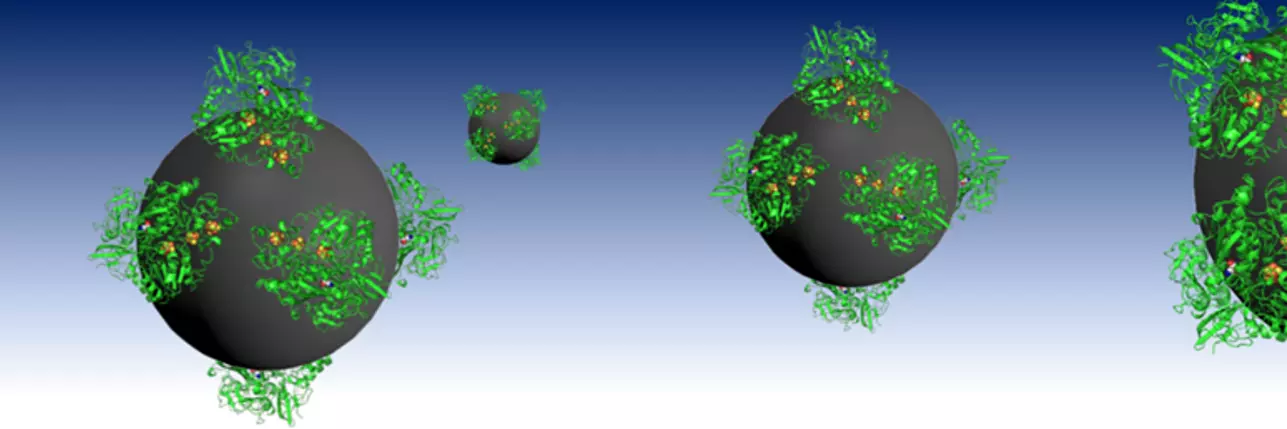
The activation of small molecules in biology is a key research theme in the Vincent group. Chemists have a lot to learn from catalytic processes which occur in microorganisms. We are particularly fascinated by how nature has tuned hydrogenase enzymes to oxidise and produce dihydrogen at earth-abundant iron or nickel-iron catalytic sites, and how nitrogenase catalyses the fixation of dinitrogen to ammonia under mild conditions.
These chemical reactions represent some of the greatest chemical challenges for solving the world's energy problems, and we hope that what we learn from studying the biocatalytic reactions will inspire development of new catalysts for energy technologies.
To study enzyme mechanisms, we combine spectroscopy, electrochemistry and structural studies. This includes using electrochemical control to manipulate crystals of hydrogenase into specific redox states for structural study. We use advanced structural approaches including x-ray free electron lasers for time-resolved structures and neutron diffraction to locate light atoms in proteins.
In parallel we are excited by the interface between academic discovery and technology innovation. We have developed and patented a series of hydrogen-driven approaches to heterogeneous biocatalysis, some of which are now licensed to HydRegen, a 2021 spin-out from University of Oxford. These include hydrogen-driven NADH recycling to support biocatalytic reductions; biocatalytic hydrogenation of nitro compounds, and hydrogenase-driven reduction of flavins to support biocatalytic applications.
We continue to innovate, seeking cleaner, simpler ways of using enzymes for chemical synthesis.